In today’s competitive construction industry, fabricators are under constant pressure to deliver projects faster, reduce operational costs, and maintain high-quality standards. However, one overlooked issue continues to create major financial losses for steel fabrication companies worldwide — inaccurate steel shop drawings.
Even a small mistake in structural steel detailing can result in fabrication delays, material wastage, installation conflicts, project rework, and client dissatisfaction. These issues not only affect project timelines but also reduce profitability for fabricators and contractors.
Accurate steel shop drawings are no longer optional in modern construction workflows. They are essential for fabrication precision, project coordination, and efficient installation. Whether it is a commercial building, industrial facility, warehouse, bridge, or infrastructure project, precise fabrication drawings directly influence project success.
With the growing use of BIM steel detailing, Tekla Structures, and digital fabrication technologies, construction firms in the USA, Australia, and Canada are increasingly investing in professional steel detailing services to minimize costly errors and improve project outcomes.
In this blog, we will explore how inaccurate fabrication drawings affect profitability, the hidden costs of poor detailing, and why professional structural steel detailing services are critical for modern fabrication companies.
What Are Steel Shop Drawings?
Steel shop drawings are detailed fabrication documents prepared by professional steel detailers based on structural engineering designs and architectural plans. These drawings provide accurate instructions for fabricators, welders, and erection teams during manufacturing and installation.
Typically, structural steel shop drawings include:
- Beam and column details
- Connection drawings
- Bolt and weld specifications
- Anchor bolt layouts
- Material dimensions
- Assembly drawings
- Erection plans
- Fabrication notes
- Bill of materials (BOM)
Unlike design drawings created by structural engineers, fabrication drawings focus on how steel members will actually be manufactured and assembled on-site.
This is why professional steel detailing services play a crucial role in construction projects.
The Real Problem: How Inaccurate Shop Drawings Cost Fabricators Money
Many fabrication companies underestimate the financial impact of poor structural steel detailing. However, inaccurate fabrication drawings can create a chain reaction of project issues.
1. Material Wastage Increases Project Costs
Incorrect dimensions, missing measurements, or improper member specifications often result in unnecessary steel cutting and material wastage.
Steel is expensive, especially in large-scale industrial and commercial projects. Even minor detailing errors can lead to thousands of dollars in wasted material and fabrication losses.
For example:
- Incorrect beam lengths
- Wrong hole placements
- Inaccurate plate dimensions
- Improper section sizes
All these errors force fabricators to reorder materials and refabricate components.
Professional steel detailing companies use advanced software like Tekla Structures and AutoCAD to ensure dimensional accuracy and minimize wastage.
Industry Statistics: The Cost of Rework in Construction
According to construction industry reports, rework can account for nearly 5% to 15% of total project costs in large construction projects.
A significant portion of this rework comes from:
- Coordination conflicts
- Drawing inaccuracies
- Fabrication mistakes
- Communication gaps
- Incomplete shop drawings
In the USA and Australia, contractors are increasingly adopting BIM coordination services and structural BIM modeling to reduce these costly issues before fabrication begins.
2. Fabrication Delays Affect Productivity
Fabrication workshops rely heavily on accurate steel fabrication drawings for smooth production workflows.
When drawings contain errors or incomplete information, workshop teams must stop production to seek clarifications. These interruptions reduce productivity and delay fabrication schedules.
Common causes of fabrication delays include:
- Missing weld details
- Unclear connection information
- Inconsistent revisions
- Incorrect material grades
- Conflicting dimensions
For fabricators handling multiple projects simultaneously, even small delays can disrupt entire production schedules.
Real Project Workflow in Professional Steel Detailing
A professional structural steel detailing workflow generally follows these stages:
Step 1: Receive IFC and Design Drawings
Fabricators or contractors provide structural and architectural drawings.
Step 2: 3D BIM Modeling
Steel detailers create intelligent 3D models using Tekla Structures or Revit.
Step 3: Clash Detection and Coordination
BIM coordination helps identify conflicts between structural, MEP, and architectural systems.
Step 4: Shop Drawing Creation
Fabrication-ready drawings are extracted from the BIM model.
Step 5: QA/QC Review
Detailing teams perform quality checks to eliminate errors.
Step 6: Client Approval
Final drawings are reviewed and approved by contractors or engineers.
Step 7: Fabrication and Installation
Fabricators use accurate drawings for production and erection.
This workflow significantly improves construction efficiency and reduces project risks.
3. Site Rework Creates Massive Financial Losses
One of the biggest consequences of inaccurate structural shop drawings is field rework.
Imagine fabricated members arriving at the construction site only to discover:
- Misaligned connections
- Incorrect bolt locations
- Improper weld clearances
- Clash issues with MEP systems
These problems force contractors to:
- Modify steel components on-site
- Re-fabricate structural members
- Delay erection schedules
- Increase labor costs
Site rework not only impacts budgets but also damages client trust and project reputation.
This is why modern construction companies increasingly rely on BIM steel detailing and clash detection services.
Role of BIM Coordination in Reducing Fabrication Errors
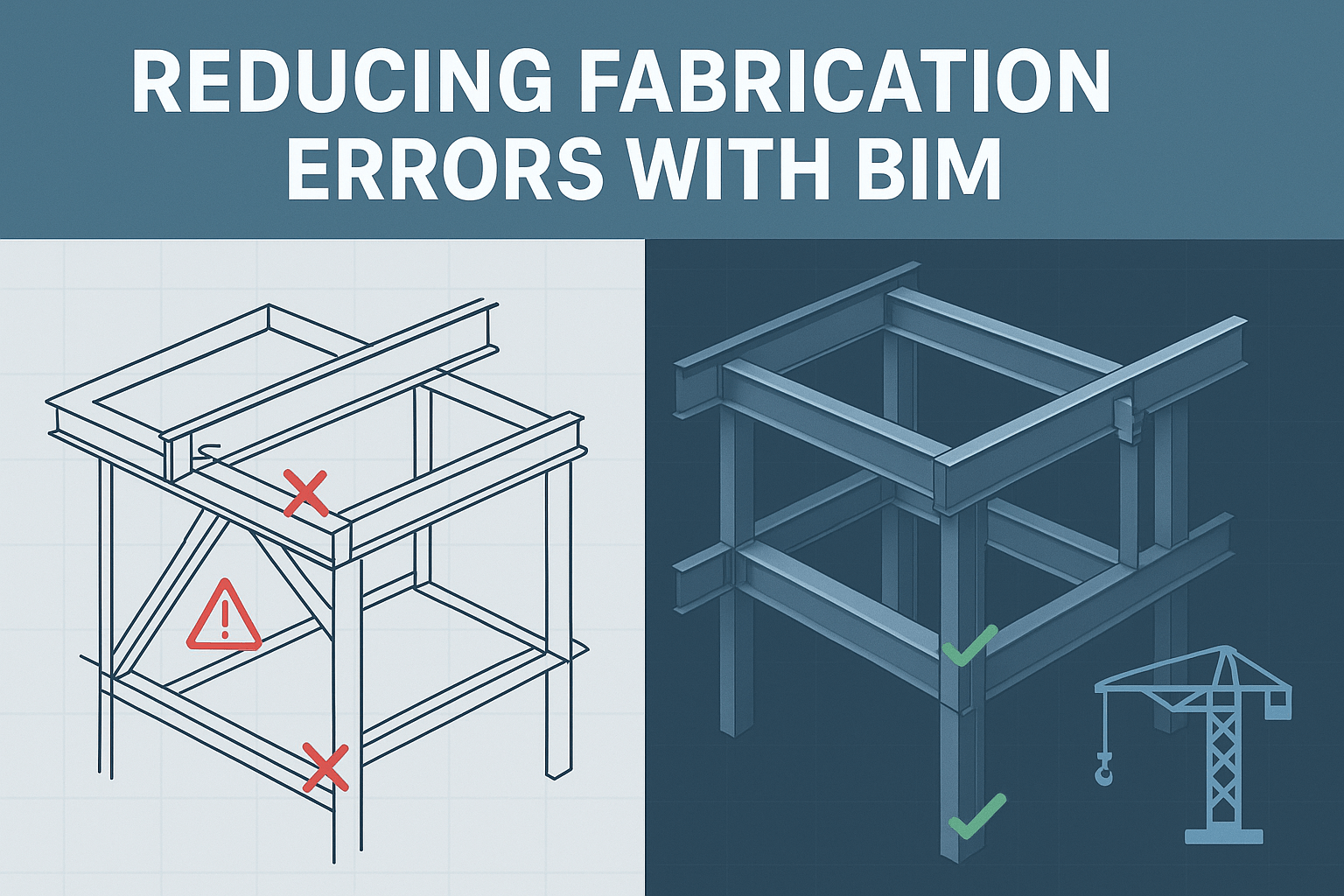
BIM coordination services have transformed the steel detailing industry by improving collaboration between stakeholders.
Using BIM workflows, detailers can:
- Detect clashes early
- Coordinate structural and MEP systems
- Improve visualization
- Reduce communication gaps
- Minimize change orders
Software such as:
- Tekla Structures
- Revit
- Navisworks
- AutoCAD
- Advance Steel
helps create highly accurate fabrication-ready drawings for complex projects.
4. Poor Communication Leads to Costly Mistakes
Construction projects involve multiple stakeholders:
- Architects
- Structural engineers
- Fabricators
- Contractors
- MEP consultants
- Site teams
Without proper coordination, communication gaps often result in drawing inconsistencies and fabrication errors.
For example:
- Revised structural drawings may not reach fabrication teams
- Connection details may conflict with architectural layouts
- MEP openings may be missing from steel drawings
Professional steel detailing companies maintain revision control systems and coordinated BIM workflows to avoid these issues.
Challenges Fabricators Commonly Face
| Challenges | Solutions |
| Fabrication delays | Accurate shop drawings |
| Coordination conflicts | BIM clash detection |
| Material wastage | Precise detailing |
| Site rework | 3D BIM coordination |
| Communication gaps | Centralized project collaboration |
| Inconsistent revisions | Revision management systems |
Why Tekla Steel Detailing Is Preferred by Modern Fabricators
Tekla Structures has become one of the most widely used software platforms in structural steel detailing.
Benefits of Tekla Steel Detailing
1. Accurate 3D Modeling
Tekla creates highly detailed and constructible steel models.
2. Automated Drawing Extraction
Fabrication drawings can be generated directly from the BIM model.
3. Better Coordination
Clashes and connection conflicts can be identified before fabrication.
4. Improved Material Management
Tekla generates accurate BOM reports and material takeoffs.
5. Faster Revisions
Model updates automatically reflect in shop drawings.
These capabilities help fabricators reduce project risks and improve production efficiency.
Benefits of Accurate Steel Shop Drawings
Reduced Rework
Precise detailing minimizes fabrication and installation errors.
Faster Fabrication
Workshops can process fabrication without interruptions.
Better Construction Coordination
Coordinated drawings improve collaboration between teams.
Lower Material Waste
Accurate dimensions reduce unnecessary steel usage.
Improved Project Timelines
Fewer errors result in faster project completion.
Higher Client Satisfaction
Quality detailing improves overall project delivery.
Why USA and Australian Fabricators Outsource Steel Detailing Services
Many fabricators in the USA and Australia outsource structural steel detailing services to offshore teams for cost-effective project execution.
Reasons for Outsourcing
- Access to experienced detailers
- Lower operational costs
- Faster turnaround times
- Advanced BIM expertise
- Flexible project scalability
Companies like MechCiv Designers LLP provide fabrication-ready shop drawing services tailored to international standards such as:
- AISC
- OSHA
- Australian Standards
- NISD guidelines
Best Practices for Error-Free Fabrication Drawings
To improve detailing accuracy and reduce project risks, fabrication companies should:
Use BIM-Based Workflows
3D modeling improves visualization and coordination.
Conduct QA/QC Reviews
Quality checks help eliminate drafting errors.
Maintain Revision Tracking
Proper revision management prevents outdated drawings.
Coordinate With All Stakeholders
Regular coordination meetings reduce communication gaps.
Invest in Experienced Detailers
Skilled detailing professionals improve project accuracy.
Future of Steel Detailing and Digital Fabrication
The future of structural steel detailing is rapidly evolving with:
- AI-driven automation
- Digital fabrication
- Cloud collaboration
- BIM integration
- Smart construction technologies
Modern fabrication companies are increasingly adopting intelligent detailing workflows to improve productivity and reduce construction risks.
As project complexity grows, accurate steel detailing services will become even more important for successful project execution.
Conclusion
Inaccurate steel shop drawings create serious financial challenges for fabricators, contractors, and construction companies. From material wastage and fabrication delays to site rework and coordination conflicts, poor detailing significantly affects project profitability.
Professional structural steel detailing services help fabricators improve accuracy, reduce rework, streamline fabrication workflows, and enhance project coordination.
By investing in BIM steel detailing, Tekla Structures workflows, and experienced detailing professionals, fabrication companies can minimize costly mistakes and deliver projects more efficiently.
For construction firms in the USA, Australia, and Canada, accurate fabrication-ready shop drawings are no longer just technical documents — they are critical business assets that directly impact project success.
Looking for accurate fabrication-ready steel shop drawings for your next construction project?
MechCiv Designers LLP provides professional steel detailing services, BIM coordination, and structural drafting solutions for fabricators, contractors, and engineering firms across the USA, Australia, and Canada.
Frequently Asked Questions (FAQs)
What are steel shop drawings?
Steel shop drawings are detailed fabrication documents used for manufacturing and installing structural steel components.
Why are accurate shop drawings important?
Accurate shop drawings reduce fabrication errors, project delays, and costly site rework.
What software is used for steel detailing?
Popular steel detailing software includes Tekla Structures, Revit, AutoCAD, Navisworks, and Advance Steel.
How does BIM improve steel detailing?
BIM improves coordination, clash detection, visualization, and project accuracy.
Why do USA fabricators outsource steel detailing services?
Outsourcing helps reduce operational costs, improve turnaround times, and access experienced BIM professionals.